
AWS posture score for teams that need clear risk priorities, not generic dashboards.
A posture score is useful only when it helps you decide what to fix this sprint. Many tools show a single percentage without explaining what drives it, which creates reporting noise. Security and engineering teams then spend time arguing about metrics instead of reducing exposure.
Posturio generates an AWS posture score and maps it to concrete findings across identity, storage, networking, and logging controls. You can immediately see where the score is being pulled down and which remediations will have the largest impact.
Score inputs
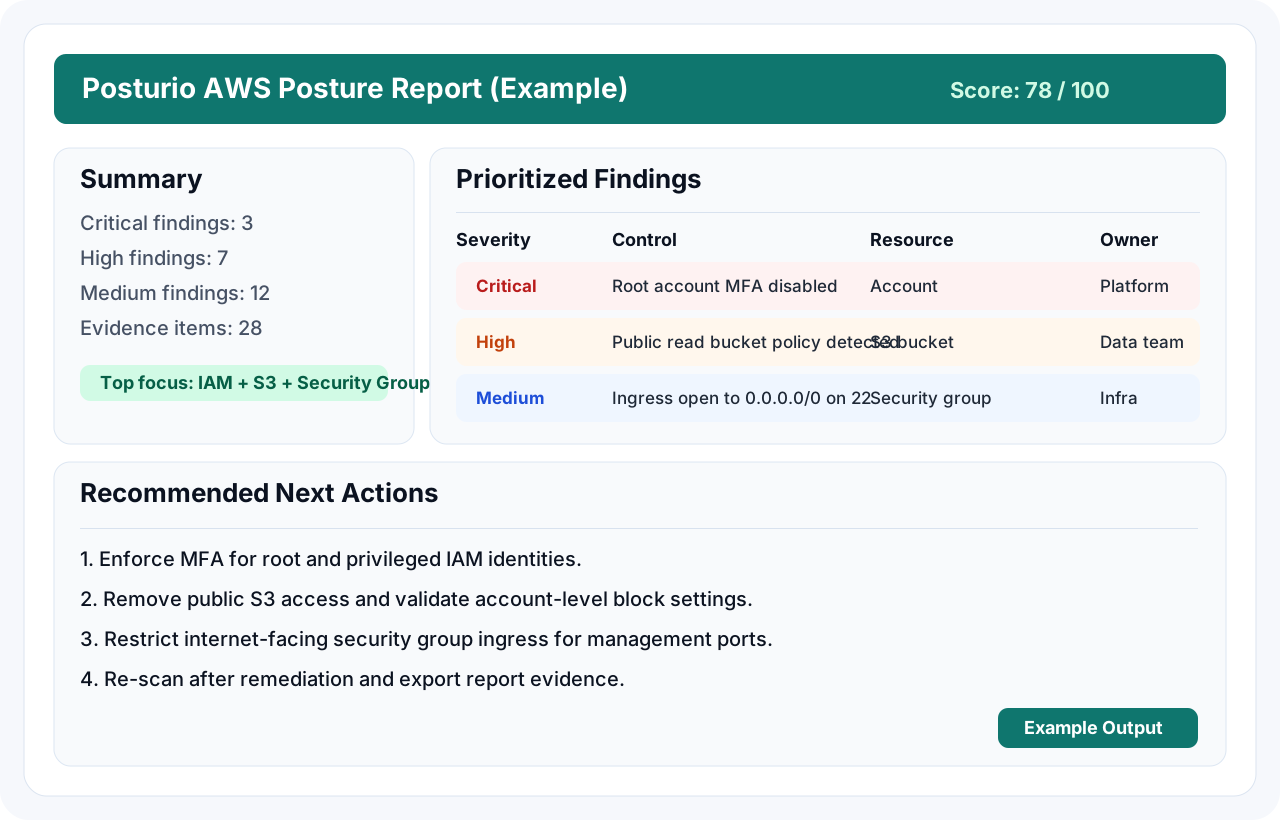
Example AWS posture score report generated by Posturio
This sample output shows how findings are prioritized with risk context and remediation guidance your team can act on immediately.
How an AWS posture score should be interpreted
Scores summarize, findings explain
The score gives leadership a snapshot, but your operations team needs detailed context. A healthy process starts with score trend tracking and then shifts quickly into finding-level remediation.
Weight controls by practical impact
Missing MFA on privileged users should carry more weight than cosmetic hardening gaps. High-impact controls need stronger contribution to the score so the metric reflects true business risk.
Separate prevention from detection
Preventive controls reduce breach likelihood, while logging and monitoring improve response quality. Your score model should represent both dimensions so you can avoid overconfidence from one strong area.
Track trend, not just point-in-time
A single scan is useful for triage, but real posture management requires trend visibility. Repeated scans show whether controls are stabilizing or if new deployment cycles are reintroducing drift.
Connect results to ownership
Findings must be assigned to platform, application, or identity owners with deadlines. Without ownership, a score remains a reporting artifact and does not drive security outcomes.
Use score changes for stakeholder updates
Executives, customers, and auditors need concise updates. Showing score movement with resolved high-risk findings gives a credible narrative of control improvement.
From first scan to repeatable AWS posture management
- Run a baseline scan and capture the initial posture score.
- Review critical findings with service owners and define remediation order.
- Fix highest-blast-radius items first: IAM privilege paths, public data access, and open ingress.
- Re-scan after each change window to measure score recovery and validate closure.
- Export reports for internal reviews and customer trust workflows.
AWS posture score FAQs
What is an AWS posture score?
It is a summarized measurement of your AWS security configuration based on control coverage and severity of identified misconfigurations.
Can we improve the score quickly?
Yes. Teams often see fast improvements by enforcing MFA, removing public S3 exposure, and tightening over-permissive security groups.
Should leadership rely only on the score?
No. Use the score as a headline metric and pair it with the critical findings list and remediation status for accurate decision-making.
How often should posture be rescored?
Monthly is a strong baseline, with additional scans after major infrastructure updates, incident remediations, or account architecture changes.