
AWS Security Scanner for Common Risks
Most cloud incidents begin with known configuration mistakes, not zero-day exploits. Security teams usually know the patterns: missing MFA, permissive IAM policies, exposed storage, and open network paths. The challenge is finding these issues fast and ranking them before backlog pressure pushes security work out.
An effective AWS misconfiguration scanner should detect common failures with clear context: what is wrong, why it matters, and who should fix it. Posturio focuses on high-impact findings so teams can reduce real risk without adding heavy operational overhead.
Scanner focus areas
What an AWS security scanner should detect first
Privileged identity gaps
Flag identities with broad administrative permissions, missing MFA enforcement, and stale credentials. These findings are high priority because they create account-wide compromise paths.
Public or over-shared storage
Detect buckets with public or unintended cross-account access. Storage findings should include the policy statement context so owners can remediate quickly without guesswork.
Internet-facing network exposure
Identify security groups that expose administrative or sensitive services to unrestricted inbound traffic. Scanner output should highlight affected resources and ports.
Missing baseline telemetry
CloudTrail and configuration logs are required for reliable investigations. Detection gaps do not cause incidents directly, but they magnify operational impact when incidents happen.
Credential hygiene drift
Long-lived access keys and inactive users increase attack surface over time. Scanner workflows should make these hygiene issues visible before they become exploitable weak links.
Prioritized remediation guidance
Good scanners do not stop at detection. Teams need practical fix guidance tied to severity so platform and product owners can resolve issues inside normal delivery cycles.
How to operationalize scanner output
- Run a baseline scan and review critical findings by exploitability and blast radius.
- Assign each finding to a service owner with a target remediation window.
- Track exceptions explicitly instead of leaving findings silently unresolved.
- Re-scan after merges and infrastructure updates to catch new drift quickly.
- Share evidence outputs with security leadership and compliance stakeholders.
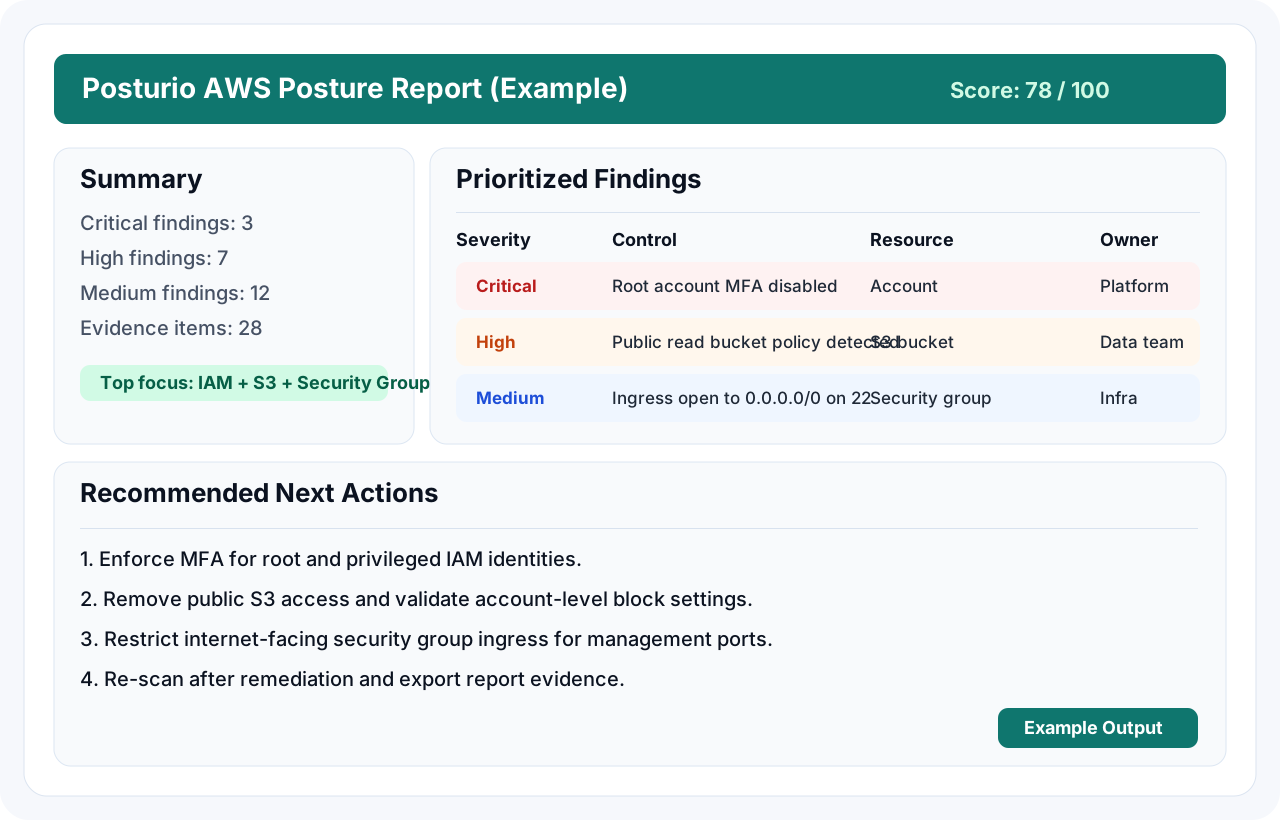
Example AWS posture score report generated by Posturio
This sample output shows how findings are prioritized with risk context and remediation guidance your team can act on immediately.
AWS misconfiguration scanner FAQs
What is an AWS misconfiguration scanner?
It is a tool that analyzes cloud configuration and highlights security control gaps such as missing MFA, public storage, and overexposed network rules.
How is this different from CSPM platforms?
The core concept is similar, but practical teams often prefer focused tooling that prioritizes actionable findings and simple workflows over broad platform complexity.
Will scans affect production workloads?
No. Posturio uses read-only integration for posture checks, so scans do not modify resource configurations.
Can we use this before SOC 2 audit prep?
Yes. Scanner output helps teams close basic control gaps early, making later readiness work faster and more predictable.