
S3 bucket security check for preventing avoidable data exposure
Publicly exposed S3 data is still one of the most common cloud incidents. In many cases, exposure comes from routine policy changes, inherited ACL settings, or assumptions that account-level controls are already enforced everywhere. Teams often discover these issues during customer diligence instead of internal review.
A practical S3 bucket security check should validate multiple control layers at once: account-level block settings, bucket policy logic, object access patterns, encryption defaults, and access logging. Posturio helps teams run this check quickly and prioritize buckets with the highest business impact.
S3 checks that matter most
What an S3 bucket security check should evaluate
Public access paths
Detect bucket policies or object ACLs that allow global read or write access. Confirm account-level block public access is active and that bucket-level settings do not create silent exceptions.
Overly broad principals
Review bucket policies for wildcard principals or external account access that exceeds business needs. Third-party integration permissions should be explicit and scoped to required actions.
Encryption defaults and consistency
Verify default encryption is enabled and aligned with your data classification policy. Inconsistent encryption settings across buckets often create compliance and incident-response friction later.
Bucket ownership and object control
Enforce ownership settings that prevent ACL complexity from reintroducing unexpected access. Ownership controls reduce operational ambiguity when multiple services write to shared storage.
Access logging and traceability
Ensure access events can be audited for sensitive buckets. Without reliable logging, teams cannot quickly determine who accessed data or whether suspicious patterns were present.
Risk tiering by data sensitivity
Prioritize fixes for buckets with customer data, production artifacts, and backups. A mild policy issue on a sensitive bucket often outranks multiple low-impact findings elsewhere.
How to reduce S3 exposure risk quickly
- Enable account-level S3 Block Public Access and verify bucket inheritance.
- Remove anonymous principals from bucket policies unless explicitly required.
- Set default encryption and verify key policy ownership.
- Activate logging for high-sensitivity buckets and centralize retention.
- Re-scan to verify closure and prevent policy drift over time.
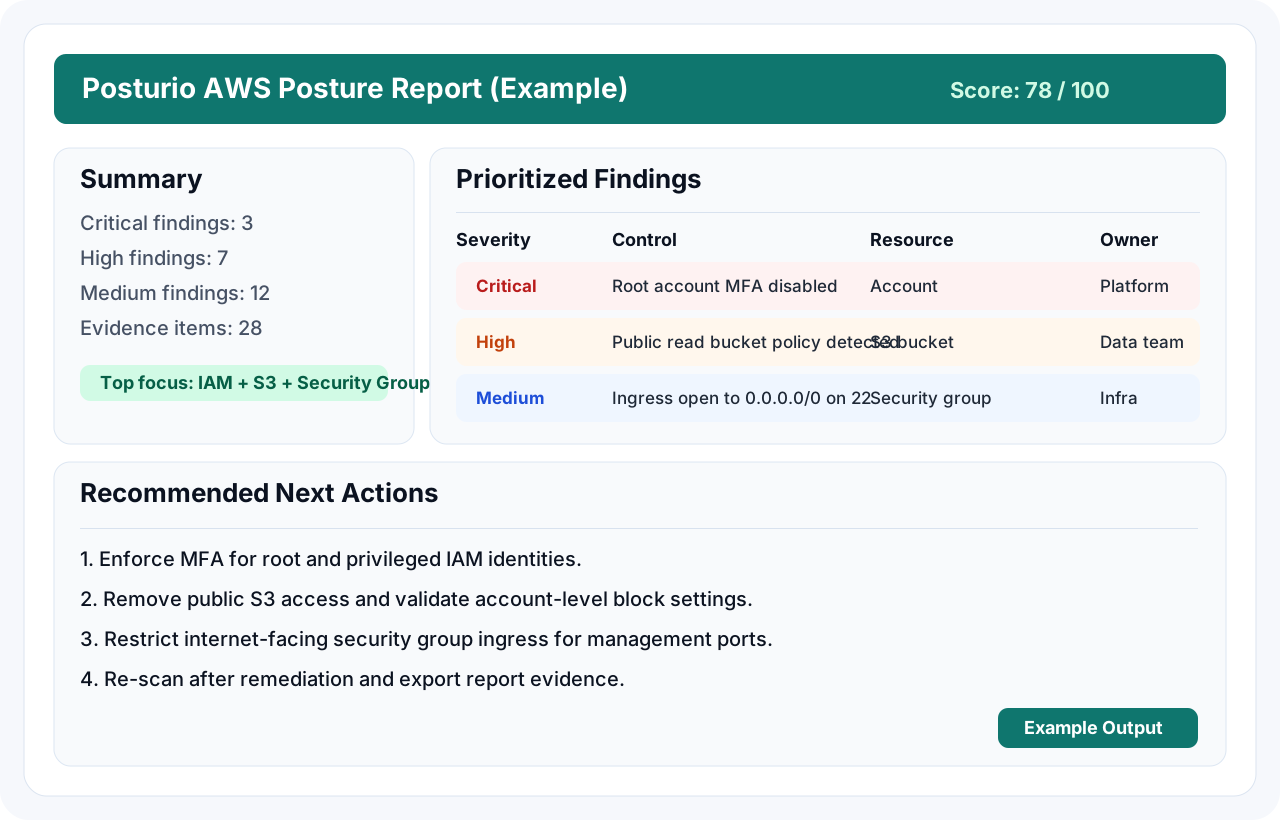
Example AWS posture score report generated by Posturio
This sample output shows how findings are prioritized with risk context and remediation guidance your team can act on immediately.
S3 bucket security check FAQs
Why are S3 buckets frequently exposed?
Exposure often comes from policy drift, legacy ACL patterns, and assumptions that account-level controls are already enforced. Small changes can unintentionally widen access.
Is account-level block public access enough?
It is essential but not sufficient. You still need bucket policy review, encryption checks, and access logging to maintain complete storage security posture.
How quickly can we run this check?
Most teams can run a baseline scan in minutes, then focus remediation on a shortlist of high-risk storage findings.
Does this require agents in workloads?
No. Posturio evaluates configuration through read-only AWS integration, so you can assess posture without runtime deployment changes.