
Public S3 Bucket ACL
This page targets the check s3.public_bucket_acl and the query
"s3 public bucket acl" so teams can move from search to remediation quickly. Instead of broad
guidance, this page focuses on what the finding means in real operations, why it changes risk posture, and
the fastest path to a verified fix.
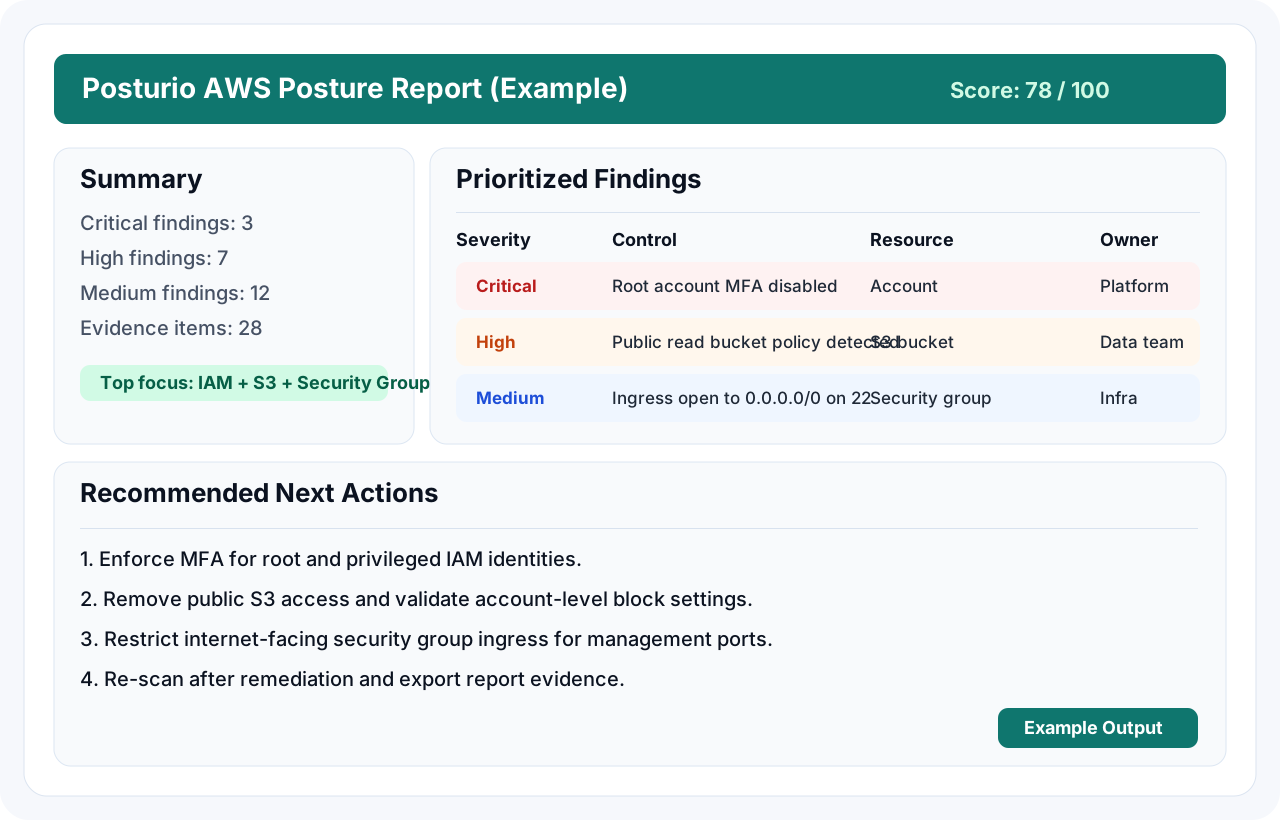
Posturio is built for practical cloud security operations. You can run a scan, confirm whether this issue exists in your environment, and prioritize remediation with clear context and ownership. The goal is not a static checklist; it is a repeatable process that improves your posture over time.
Check metadata
Understanding the finding in operational terms
Bucket or object ACLs allow public read or write access. In practice, this finding usually appears when baseline controls are implemented inconsistently across accounts, workloads, or teams. It can remain hidden for long periods because infrastructure drift happens gradually and ownership is often split between platform and application groups.
Treat this check as a control signal, not just a point-in-time warning. If the same issue appears after every deployment cycle, you likely need stronger preventive guardrails in infrastructure-as-code and review pipelines. Fast remediation is important, but durable prevention is what protects engineering velocity.
Risk impact and business implications
Security impact
ACL-based exposure is easy to miss and can bypass expected policy review processes. Findings in this category often sit on critical attack paths, so delayed remediation can compound risk.
Operational impact
Unresolved controls increase incident response load and create repeated triage work for the same root cause. Teams lose time on reactive cleanup instead of planned hardening.
Trust impact
Customers, auditors, and procurement teams increasingly ask for concrete evidence around cloud controls. Fixing and verifying this issue improves both security outcomes and external trust conversations.
Remediation steps for Public S3 Bucket ACL
- Inspect bucket and object ACL grants for AllUsers or AuthenticatedUsers groups.
- Remove public ACL grants from sensitive buckets and objects.
- Enable object ownership controls to reduce ACL complexity.
- Standardize on bucket policy controls where possible.
Verification workflow for reliable closure
- Confirm ACL grants no longer include public groups.
- Validate ownership and policy controls remain intact after updates.
- Re-run Posturio and ensure s3.public_bucket_acl passes.
Verification should include both direct AWS configuration checks and scan-based confirmation. Combining these two methods catches false assumptions early and gives your team stronger evidence for internal or external reviews.
Public S3 Bucket ACL FAQs
Should we disable ACL usage entirely?
Many teams do, using bucket-owner enforced settings and policy-based access as the default.
Can object ACLs still cause exposure?
Yes. Individual object ACLs can reintroduce public access even when bucket policy seems restrictive.
Is migration risky?
It can be if legacy workflows depend on ACLs, so validate access expectations before cutover.
How do I verify public s3 bucket acl is fully remediated?
Re-run your scan and confirm s3.public_bucket_acl passes, then review AWS configuration directly to validate persistence.